If you've ever walked into a workshop or manufacturing unit and wondered how heavy materials move so effortlessly overhead, chances are you were looking at some form of overhead crane system. But not every facility has the luxury of extra columns or high ceilings to install a standard top-running crane. That's where the Under Running Overhead Crane comes in, a design that's been quietly solving space and budget problems for factories for decades.
At Stalmac Enterprise, we've seen this question come up again and again from clients across Gujarat: how do you add reliable lifting capability to a building that simply wasn't designed for it? This blog walks you through what makes this crane type different, where it fits best, and why so many businesses end up choosing it once they understand how it works.
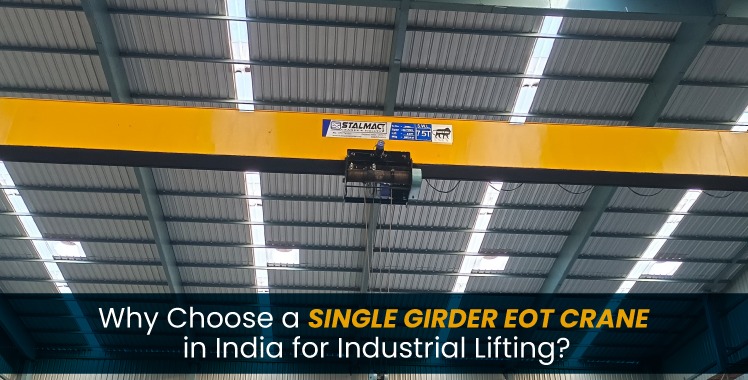
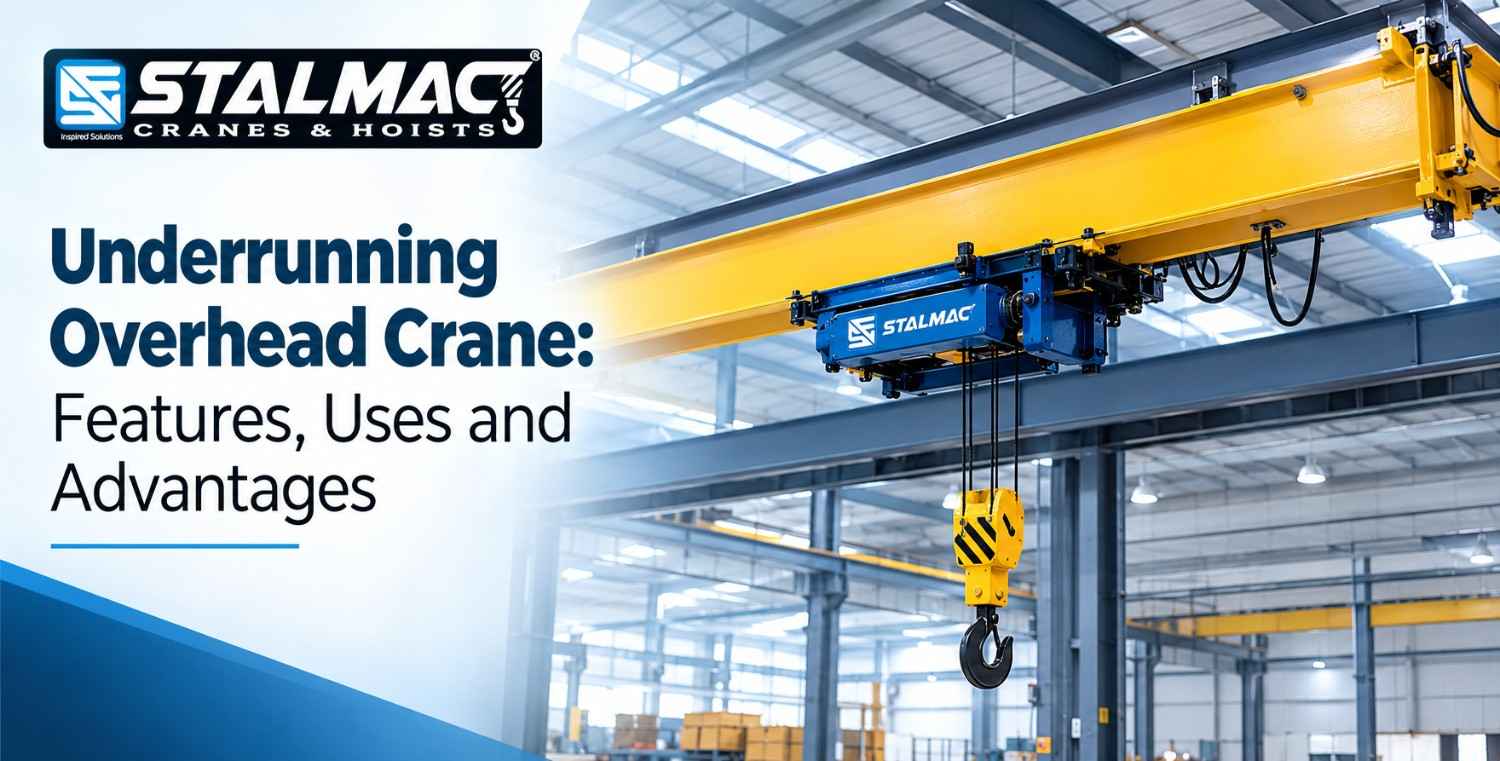
Put simply, an Under Running Overhead Crane is a crane where the end trucks travel along the bottom flange of the runway beam instead of on top of it. Picture the crane hanging from the beam rather than sitting on it. That's the whole idea, and it's also why people often call it an underhung or underslung crane.
This is quite different from a top-running crane, where the bridge sits on rails mounted above the runway beam, and those beams usually need their own dedicated support columns. An underrunning crane skips a lot of that, it can simply be bolted to the roof trusses or steel framework that's already there.
The end trucks grip the lower flange of an I-beam (or similar section), and that beam is fixed directly to the building's roof structure. The trolley and hoist then move along the bridge girder, so the load can travel both across and along the building. Because the crane is essentially hanging rather than standing, it makes much better use of whatever headroom you've got which matters a lot in buildings that weren't built with tall ceilings in mind.
1. It Saves Space Where It Matters
This is really the headline feature. Since the crane runs underneath the beam instead of needing its own rail system on top, you don't lose extra vertical clearance to structural additions.
2. Works With What You Already Have
More often than not, these cranes attach straight to the existing roof trusses. That means less new steel, less civil work, and a shorter path from planning to installation.
3. Lighter Build, Lighter Cost
Because underrunning systems are generally built for lighter to medium loads, they don't need the heavy-duty construction that top-running cranes do. That naturally brings the cost down too.
4. Flexible Configurations
You can go single girder or double girder depending on load and span, and in some layouts, multiple cranes can even share the same runway, useful if your workflow needs more than one lifting point.
5. Smoother Operation
With variable frequency drives now standard in most modern units, acceleration and braking are much smoother than older systems, which cuts down on load swing and gives operators better control.
You'll find underrunning overhead cranes doing quiet, everyday work across a range of industries:
Automobile assembly lines, moving parts between stations
Warehouses and distribution centers, handling pallets and packaged goods
Fabrication workshops, shifting raw material and finished parts around
Maintenance bays, lifting components during servicing
Small and mid-sized manufacturing units, particularly older buildings with structural constraints
Textile and packaging units, for repetitive, lighter lifting tasks
They're especially handy when you're retrofitting an existing building rather than starting from scratch, since you're not fighting the structure, you're working with it.
It Costs Less to Install
Skipping dedicated support columns isn't just convenient, it genuinely cuts down civil and structural costs, sometimes significantly.
Your Floor Stays Clear
No floor-mounted columns means your workspace stays open for machinery, storage, or just people moving around freely.
Installation Doesn't Drag On
Fewer structural components to build means the whole process, from planning to commissioning, tends to move faster than with top-running systems.
Good Fit for Older Buildings
A lot of industrial buildings weren't originally designed with cranes in mind. Underrunning systems give these spaces a way to add lifting capability without tearing the place apart.
Makes Sense for Lighter Loads
If you're not dealing with extremely heavy lifting, there's little reason to pay for a double girder top-running setup when an underrunning crane does the job just as well, at a lower cost.
This is probably the most common question we get. The short answer: it depends on your load and your building. Top-running cranes ride on rails above the beam and are usually backed by dedicated columns, which makes them better suited for heavier loads and wider spans. Underrunning cranes, hanging from below, work best for lighter loads in buildings where you'd rather not add more structure than necessary.
So if you're lifting very heavy loads across a large span, top-running is probably the way to go. But for most light-to-medium operations, an underrunning overhead crane hits a good balance between cost, speed of installation, and everyday practicality.
Every facility is a little different, different ceiling heights, different loads, different budgets. At Stalmac Enterprise, we've spent years working through these variables with clients, which is why we don't just sell a crane, we help figure out which configuration actually fits your space. Single girder, double girder, whatever suits your operation, the goal is always a system that works safely and reliably for years, not just on installation day.
If you're searching for an Under Running Overhead Crane in Ahmedabad, our team can walk you through design, manufacturing, installation, and the after-sales support that keeps things running smoothly. We've worked across automotive, pharmaceutical, textile, and general manufacturing setups, so we've likely seen a building layout similar to yours before.
Before finalizing your crane, it's worth thinking through:
Load capacity. What's the heaviest weight you'll realistically be lifting on a regular basis?
Roof and structural strength since the crane hangs from the ceiling, the existing framework needs to be checked for load-bearing capacity.
Span and travel distance how far does the crane need to move across your facility?
Usage frequency occasional lifting needs a different setup than continuous, heavy-duty use.
Getting these right at the planning stage saves a lot of trouble (and expense) down the line.
1. What's the real difference between an underrunning crane and a top-running crane?
An underrunning crane's end trucks travel along the bottom flange of the beam, so the crane hangs from below. A top-running crane rides on rails placed on top of the beam and usually needs its own support columns. Underrunning setups are lighter and need less structural work.
2. How much weight can an underrunning overhead crane lift?
It depends on the design, span, and the strength of the structure it's attached to, but generally, these cranes are built for light to medium loads. A manufacturer can confirm the right capacity after looking at your specifics.
3. Can I add an underrunning crane to a building that's already built?
Yes, that's actually one of its biggest strengths. Since it usually attaches to existing roof trusses, retrofitting an older building is much simpler than installing a top-running system from scratch.
4. Can this crane type be used outdoors?
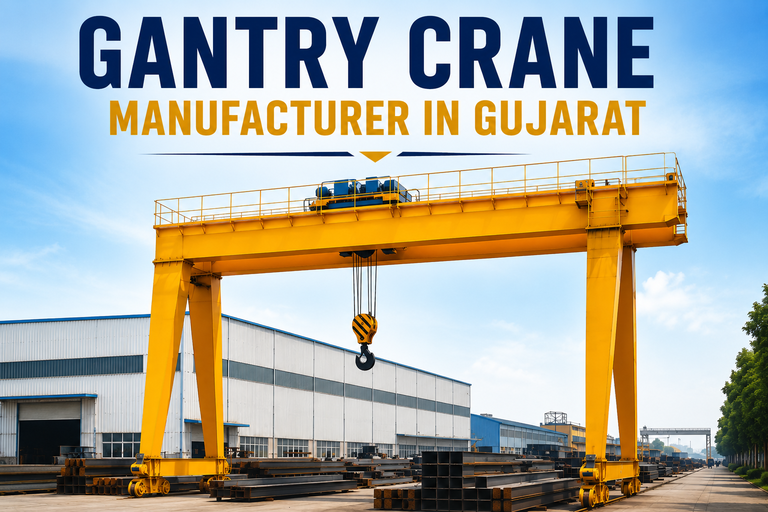
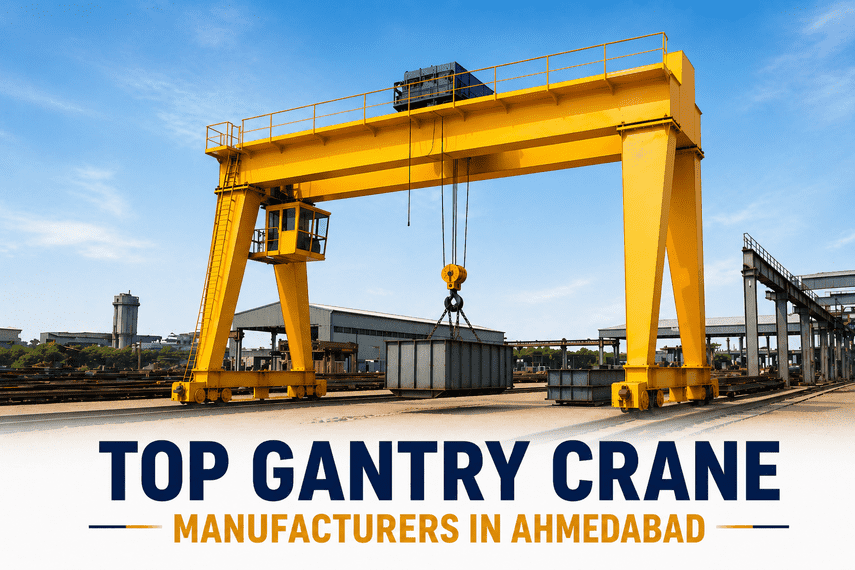
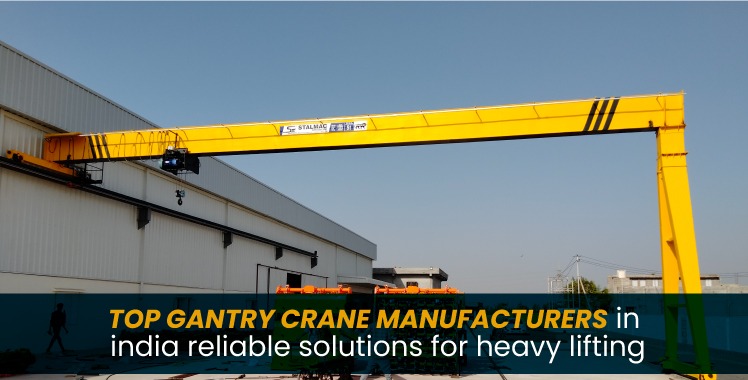
Not really, it's built for indoor use where it can rely on the building's structure for support. For outdoor lifting, something like a gantry crane would be the better fit.
5. Which industries use underrunning overhead cranes the most?
Automotive assembly, warehousing, textile processing, general fabrication, and maintenance workshops are among the most common users, mainly because their lifting needs match well with what these cranes offer.
An underrunning overhead crane isn't flashy, but it solves a very real, very common problem, how to add reliable lifting capability without rebuilding half your facility. It makes smart use of existing structure, keeps installation costs down and still delivers the performance most light-to-medium operations actually need.
If you're weighing your options for an Under Running Overhead Crane, it really pays to talk to someone who's installed a few hundred of them. Stalmac Enterprise has been doing exactly that across Ahmedabad and beyond, helping businesses find a crane setup that actually fits their building, their budget, and their daily operations, not just a generic solution off a catalogue. If your facility is fighting a headroom problem or an outdated building layout, don't let it hold your production back. Get in touch with Stalmac Enterprise today for a free consultation and a customized crane solution built around your exact space, load, and budget.