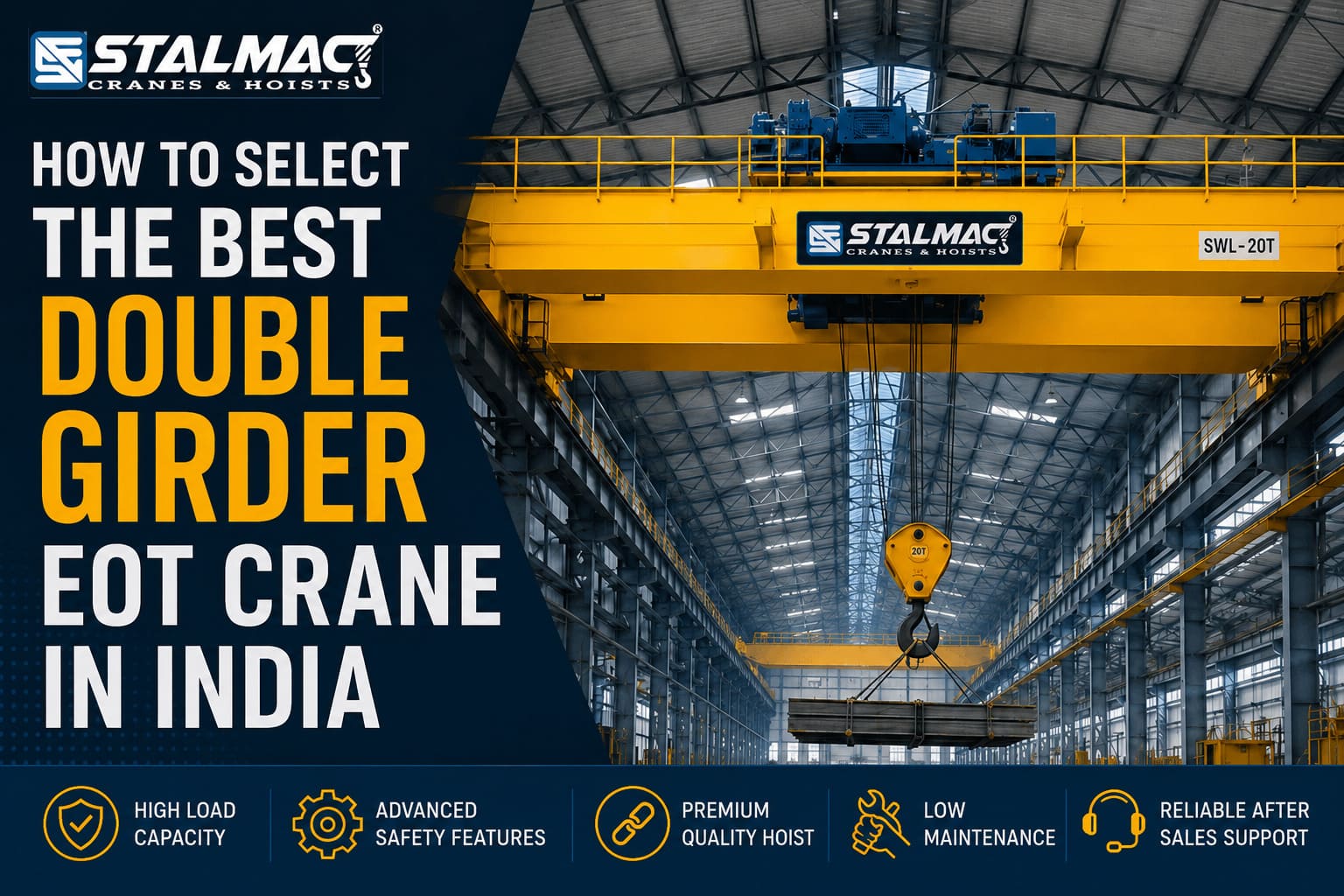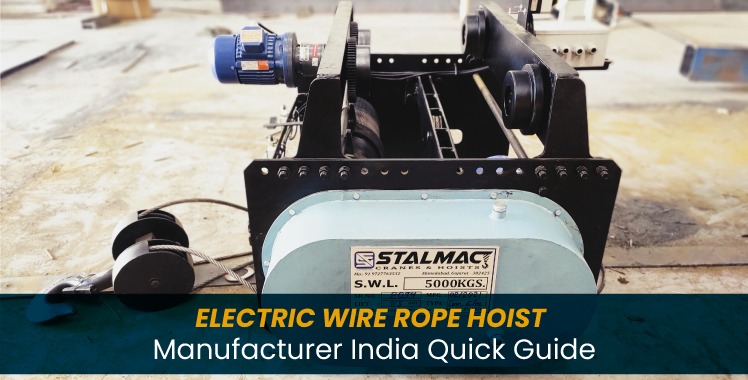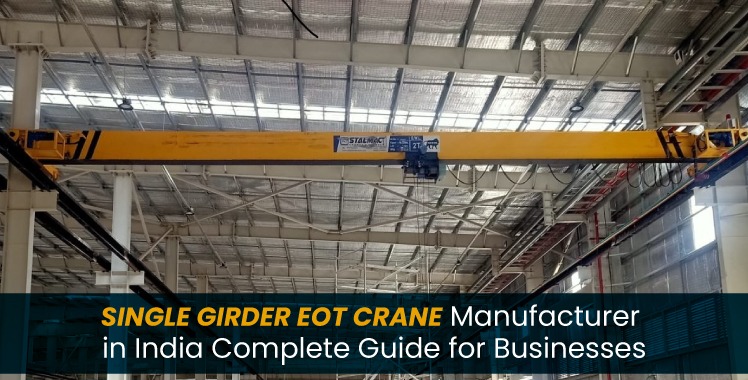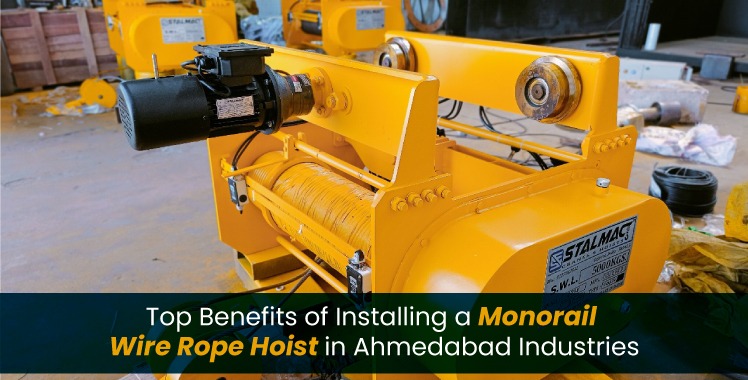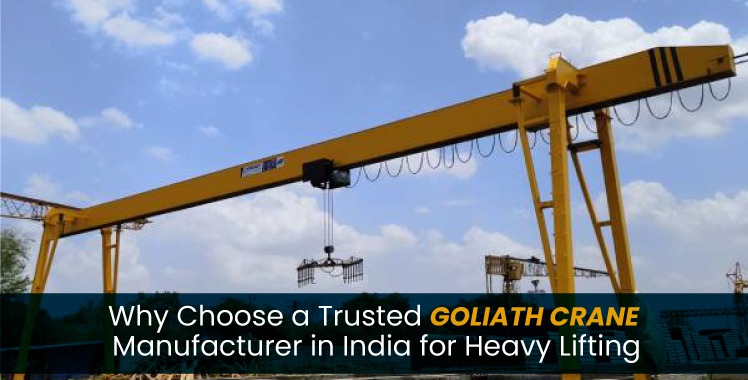
Walk through any manufacturing plant that deals with steel components, fabricated assemblies, machinery parts, dies, or molds, and you'll notice one constant problem: someone always needs to move something heavy from point A to point B. When the load is too much for a forklift, a hand crane, or a couple of workers with a trolley, an overhead lifting system usually becomes the answer. Stalmac Enterprise builds EOT cranes and material-handling equipment for exactly these situations, including double girder EOT cranes meant for heavy-duty lifting work.
If you're currently looking into a double girder hoist in India, here's the thing, the real question isn't "how much can it lift?" That's actually one of the easier parts. What matters more is how the lifting height, span, headroom, operating frequency, travel path, and general working environment of your plant come together. Get that match right, and you end up with a material-handling setup that just works, day after day, without surprises.
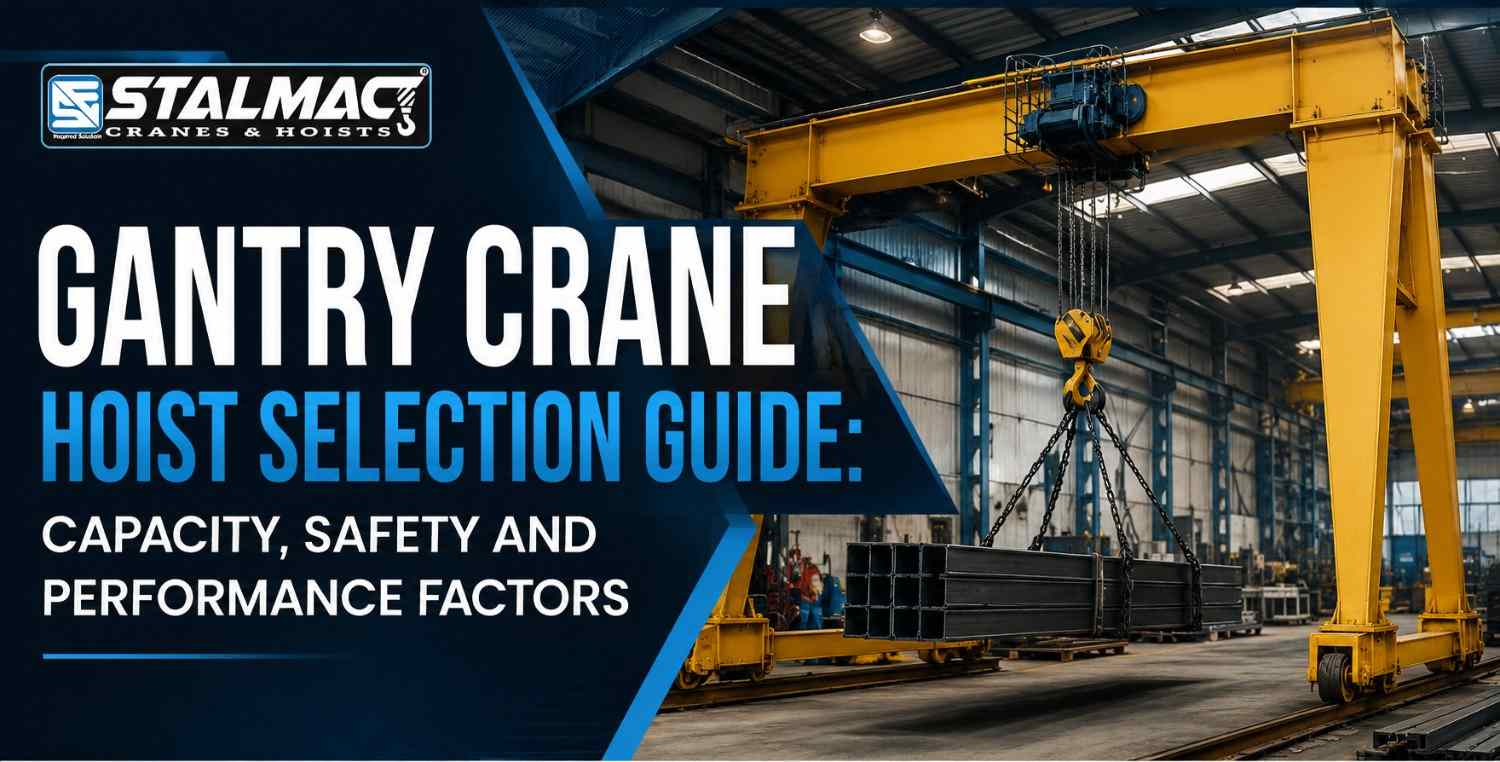
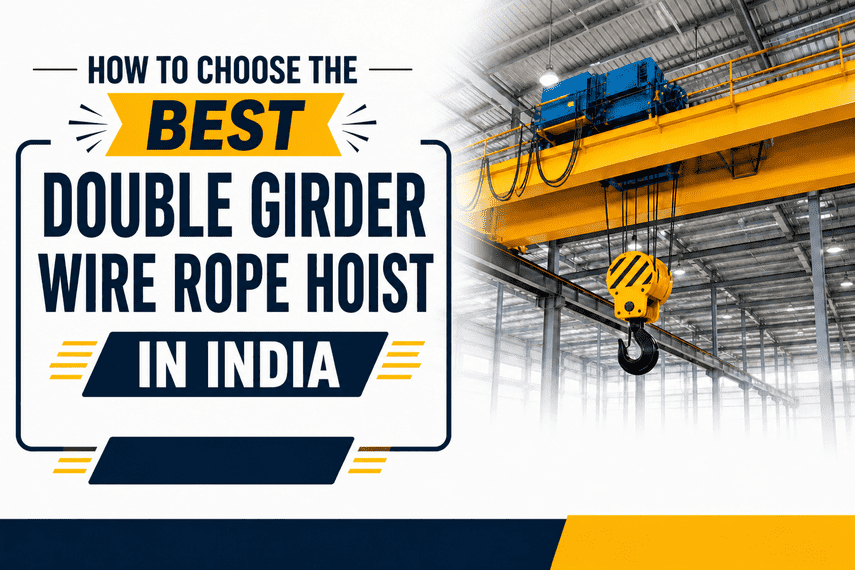
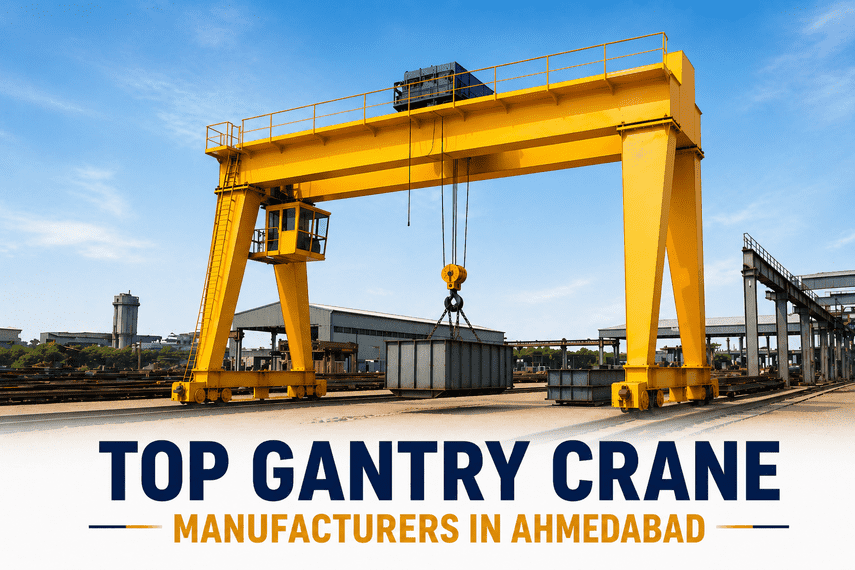
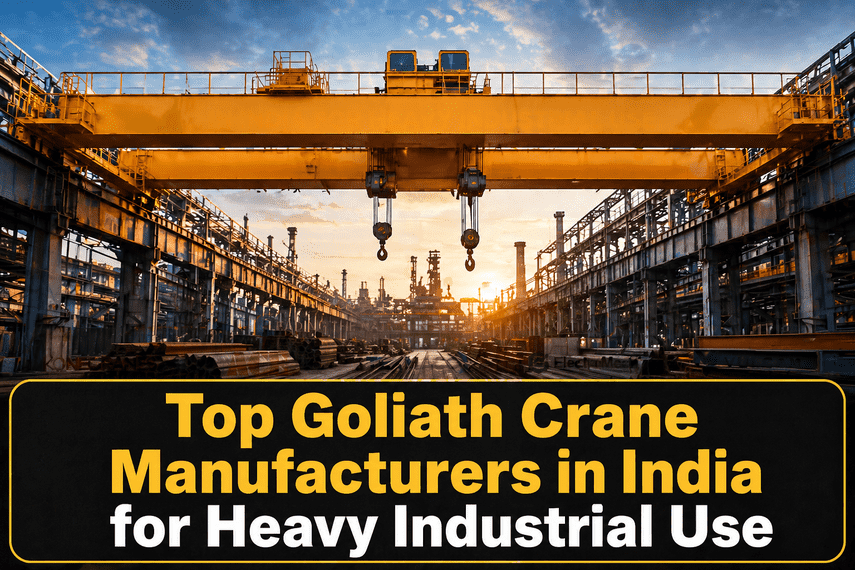
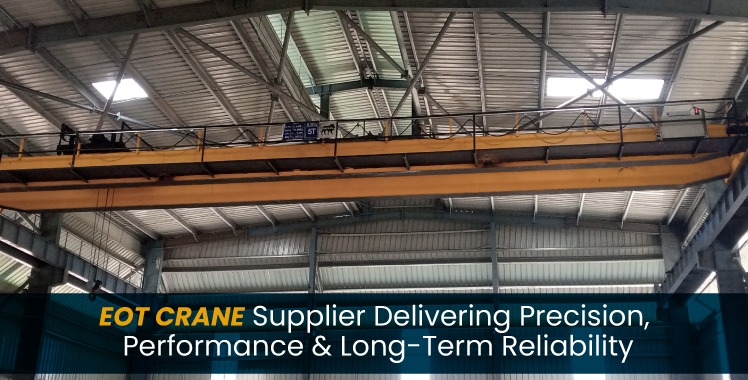
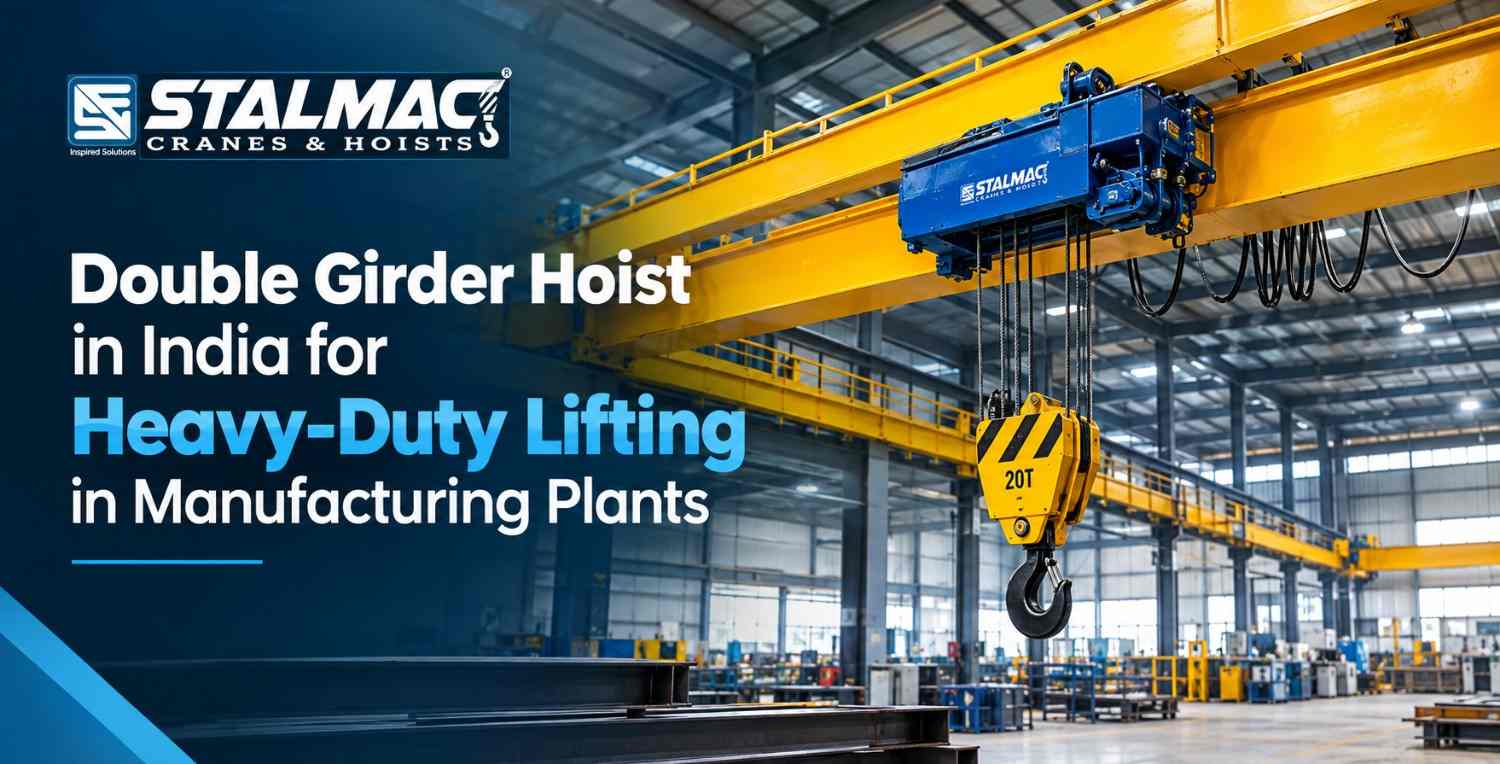
A double girder overhead crane, as the name suggests, runs on two parallel bridge girders instead of one. These girders sit on end trucks that travel along runways, and the hoist itself moves along the bridge, lifting loads up and down while also being carried side to side across the work area. Because you've got two girders instead of one, the whole structure can handle heavier loads, cover longer spans, and hold up better under tougher operating conditions.
Nothing complicated here, it's a repeatable sequence:
That back-and-forth of vertical lifting and horizontal travel is what makes double girder systems so useful in plants where materials need to move across a fairly large working zone, not just up and down in one spot.
Most manufacturing operations are constantly shuffling raw materials, components, tooling, and finished goods around. An overhead system keeps all that movement contained within a defined area instead of cluttering the floor with forklifts and trolleys crossing paths.
Double girder setups tend to get chosen when a job calls for a sturdier overhead structure, think bigger loads, longer spans, or conditions that would push a lighter system past its comfortable limits. Stalmac's own product lineup positions its double girder EOT cranes specifically for this kind of heavy-duty work.
Industries like automotive, power generation, pharmaceuticals, petrochemicals, ports, and waste-to-energy plants don't all need the same equipment, their processes are too different for that. But many of them do rely on some form of double girder crane or hoist somewhere in their operations, depending on what they're lifting and how often.
The right fit always comes down to how material moves through your specific plant, what the loads look like, and how your building is laid out. A few common scenarios:
Steel and Fabrication Plants
Steel plates, structural sections, and fabricated assemblies often need repositioning at several points during production. An overhead system handles that lifting and shifting within the crane bay without needing a dozen extra hands.
Automotive Manufacturing
Car plants move dies, fixtures, sub-assemblies, and heavy components constantly. Which crane configuration makes sense here really depends on weight, size, how often the handling happens, and how the production floor is arranged.
Machinery and Engineering Workshops
Big machine parts, motors, gearboxes, and full assemblies are everyday business in engineering plants. Once the load or the span goes beyond what a lighter crane can comfortably manage, that's usually the point where a double girder system starts making more sense.
Power and Process Industries
These plants often need lifting equipment for heavy components and maintenance work. Here, the crane spec really has to reflect the environment it's working in, access constraints, expected duty cycles, and the nature of the components involved.
Equipment selection should start with the job, not with a spec sheet. Before you lock in a configuration, walk through these factors carefully.
1. Load Capacity
Figure out the heaviest load you'll realistically need to lift, and think about what kind of loads they typically are. Don't just default to the biggest capacity available, match the rating to the actual application and the engineering requirements behind it.
2. Span
Span is simply the distance between your crane runway rails. Measure your working area properly and be honest about how much horizontal coverage you actually need. Going bigger than necessary doesn't just cost more, it can affect the whole crane design and what your building needs to support it.
3. Lift Height
This determines how far the hook needs to travel vertically. Before finalizing anything, check your required lifting level, the lowest hook position you'll need, the building's height, the roof structure, and whether anything might get in the way.
4. Duty Cycle and Operating Frequency
A crane that gets used occasionally for maintenance has completely different demands than one running through every production shift. Think about operating hours, how often lifting happens, load cycles, and how many starts and stops it'll see day to day.
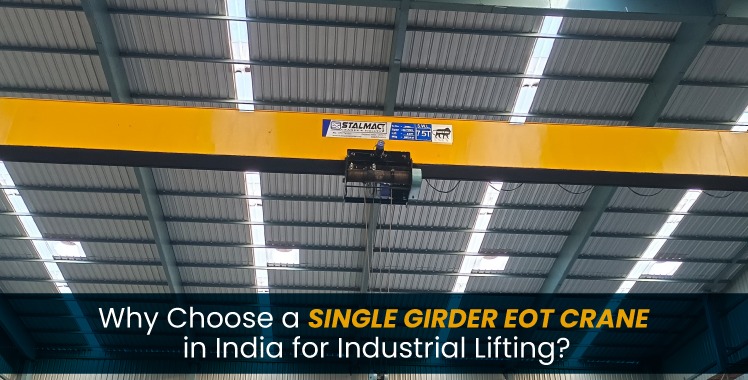
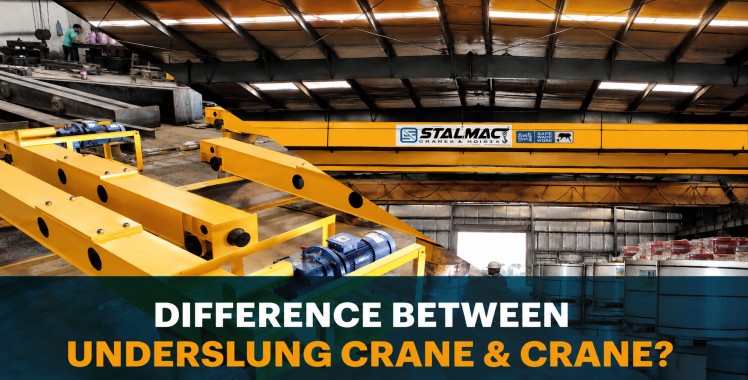
Whether you go single or double girder really depends on what you're trying to do. Single girder EOT cranes usually cover lighter or medium-duty work just fine, while double girder systems tend to get picked for heavier loads, bigger spans, or tougher operating demands.
Stalmac Enterprise makes both, and describes its double girder model, supported by end trucks and runways, as built specifically for heavy-duty material handling.
At the end of the day, the right choice comes down to load, span, hook height, duty cycle, your building's structure, and how material actually flows through your plant, not simply which one has more girders.
Lifting equipment needs regular inspection, there's no way around that. Operators and maintenance teams should stick to the manufacturer's guidelines and whatever safety standards apply. Routine checks typically cover hooks, wire ropes, brakes, electrical systems, controls, wheels, and structural components, depending on the crane's design.
Operators should always use the right lifting accessories, never push past the rated capacity, keep people away from suspended loads, and follow proper operating procedures. How often maintenance happens should depend on the equipment's condition, how much it's used, and the manufacturer's recommendations, not just a fixed calendar.
Unplanned crane downtime is a bigger deal than people sometimes expect. In a production environment, it doesn't just stop the crane, it can stall the whole material flow.
A heavy-duty crane is a long-term investment, so the decision shouldn't rest on lifting capacity alone. A system that actually fits your plant's load profile, span, lift height, duty cycle, building structure, and workflow gives you something far more predictable to work with, and predictability is exactly what you want from equipment this expensive.
If you're evaluating a double girder hoist in India, it's worth having a real technical conversation with your supplier before anything gets built. That's the stage where installation conditions, maintenance expectations, control preferences, and future operational needs actually get sorted out.
What is a double girder hoist used for?
It's used for lifting and moving heavy loads in industrial settings, usually as part of a double girder overhead crane system, in cases that call for serious lifting capacity, wide travel coverage, or demanding operating conditions.
Is a double girder crane suitable for manufacturing plants?
Yes, particularly where heavy loads need repeated lifting and movement within a defined crane bay. The final setup should still be chosen based on capacity, span, lift height, duty, building structure, and workflow.
What information do I need to select a double girder hoist?
Maximum load, lifting height, crane span, runway length, operating frequency, load dimensions, installation environment, available headroom, and the travel and control setup you need.
What's the difference between a hoist and an EOT crane?
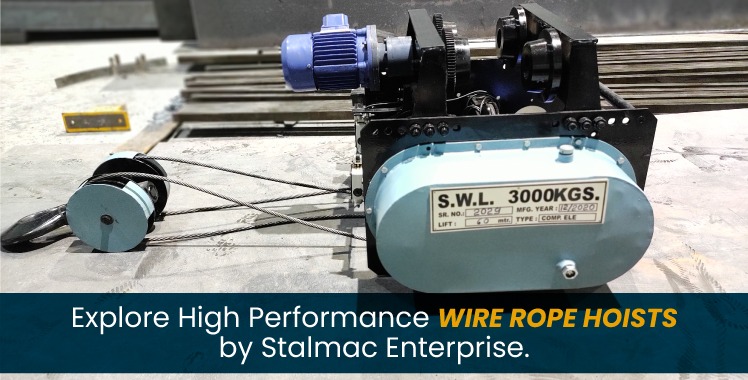
The hoist handles lifting and lowering. The EOT crane is the bigger travelling system that moves the hoist and its load along the bridge and runway. Together, they make up the full overhead lifting arrangement.
Why pick a double girder configuration over a single girder one?
Usually when the job involves heavier loads, longer spans, or tougher operating requirements. The decision should come from actual technical needs, not just a preference for more girders.
For plants dealing with heavy materials day in and day out, a double girder overhead lifting system offers a practical way to move loads across production and storage areas without constant manual effort. Getting it right comes down to engineering fundamentals capacity, span, lifting height, duty cycle, operating environment, and building conditions.
Planning a new crane installation, replacing aging equipment, or expanding what your plant can handle? Talk to the team at Stalmac Enterprise about your load and layout requirements, and work out a double girder lifting solution that actually fits how your manufacturing operation runs.